

I tried giving my dog eggplant,
and it made me realize why you really need to be careful.
Why eggplant seems like a light, easy veggie for dogs
Eggplant is a vegetable with a high water content.
It also contains fiber, so in small amounts,
it can work as a way to add a little variety
to your dog’s treat routine.
It’s also relatively low in calories.
The purple skin contains anthocyanin pigments,
along with nutrients like vitamins and potassium.
That said, if you’re thinking about dog eggplant as a nutritional boost,
there’s no need to go out of your way to feed a lot of it.
It’s not something that should replace a balanced meal—
I think of it more as an occasional vegetable treat.
Why I serve cooked eggplant instead of raw eggplant
At my house, when I prepare dog eggplant,
I give it cooked rather than raw.
Raw eggplant has a firm, slightly tough texture,
which can be uncomfortable for some dogs to eat.
If your dog already has a sensitive stomach,
starting with a large amount right away
can be a bit much.
Steaming or boiling it until soft, then cutting it into bite-size pieces,
makes it much easier to serve.
If it’s your dog’s first time trying it, start with tiny pieces.
Afterward, watch for vomiting, diarrhea,
itching, or any other unusual reaction.
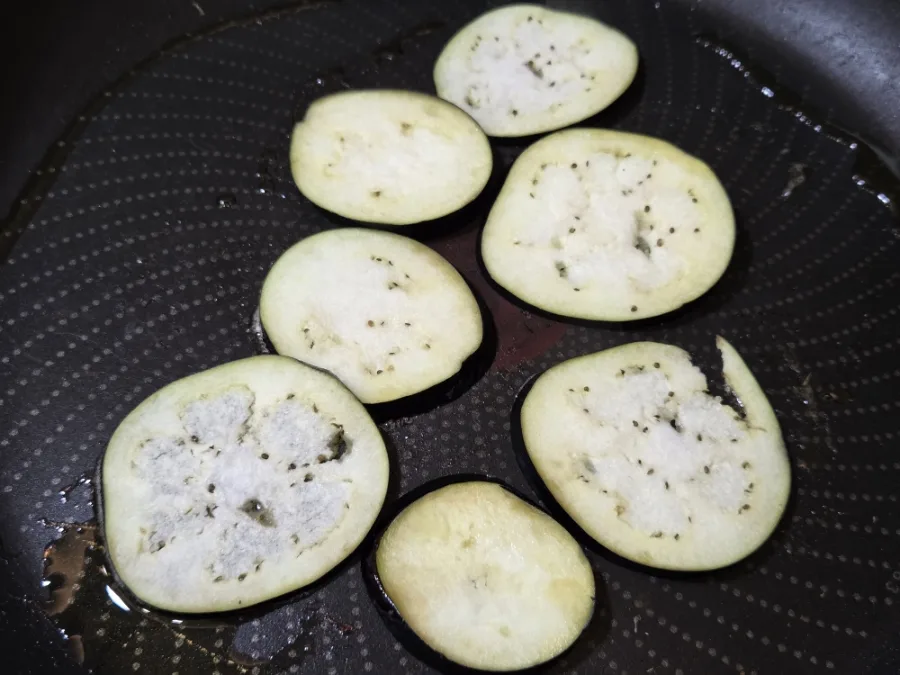
What worried me more than the eggplant itself: the oil
What I ended up rethinking wasn’t the eggplant itself, but how I cooked it.
I used to grill eggplant in olive oil,
but then I realized eggplant soaks up oil surprisingly well.
Using olive oil for dog eggplant
isn’t automatically a problem,
but there’s really no reason to use much of it.

The more oil you add, the more fat
and calories your dog ends up eating.
Especially if your dog is watching their weight
or needs to be careful with fat intake, steaming
or boiling is probably the simpler option than grilling.
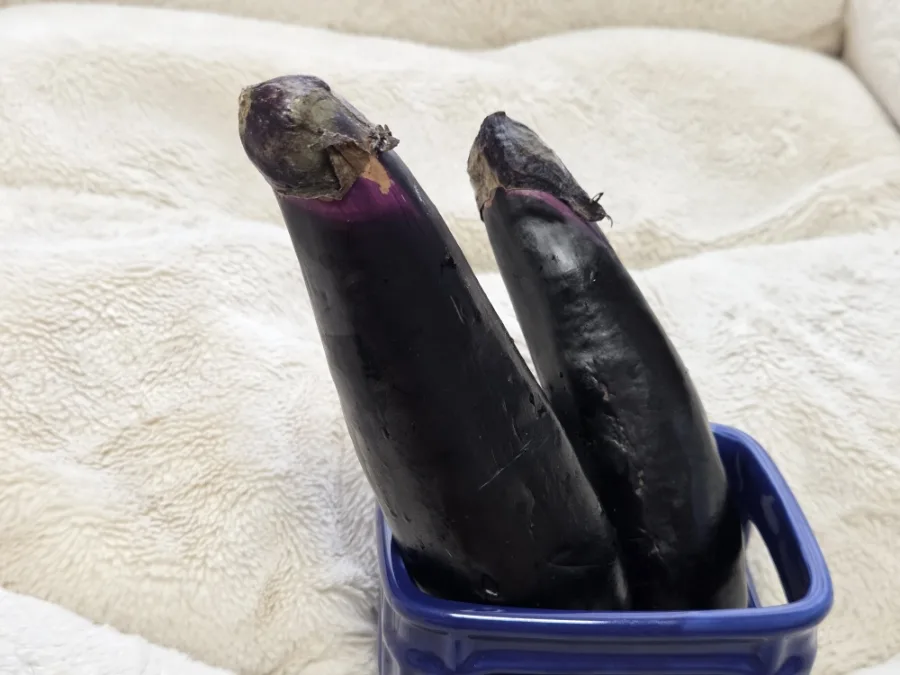
I also wondered whether the seeds and skin were okay
Eggplant skin can be fed in small amounts if it’s washed well and cooked first.
That’s usually how I’d serve it.
But if your dog doesn’t like the texture of the skin
or has a sensitive digestive system, peeling it
is also a perfectly fine option.

As for the seeds, you don’t need to remove every tiny seed
from a young eggplant one by one,
but if the eggplant is overripe and the seeds have become large and hard,
I wouldn’t bother choosing it as a dog treat.
If you’re feeding dog eggplant for the first time, I feel better
choosing a fresh eggplant in good condition and cooking it
until soft.

In the end, how you serve it matters more than the eggplant itself
These days, when I make dog eggplant,
I don’t drizzle in oil as generously as I used to.
I cook it plain, without salt or seasoning,
and even if I use olive oil, it’s only a tiny amount.
And even if my dog seems to tolerate eggplant well, I still don’t give a lot at once—
just a little at a time as a treat.
If your dog has never had it before, start with an even smaller amount and check their reaction.

I used to think eggplant was just an easy vegetable to give without much thought,
but once I looked into it,
I realized the cooking method and portion size matter more than the eggplant itself.
If you’ve been grilling dog eggplant for your pup like I was,
you might want to take a second look at how much oil
you’ve actually been using.